

Most people underestimate how difficult books are to move until a box splits open, a spine bends, or lifting one carton tweaks their back. Books are compact, dense, and often irreplaceable, whether they’re textbooks, novels, family photo albums, or carefully collected hardcovers.
This guide shows you how to pack books for moving safely and simply, without damaging them or overloading yourself. It focuses on practical, repeatable steps that work whether you’re moving straight into a new place or storing books temporarily during a renovation, downsizing, or delayed move.
Everything You Need Before Packing Books
Before you start, set yourself up properly. Having the right materials and a clear plan makes a noticeable difference.
Essential Packing Materials
- Small, sturdy boxes: Small boxes help keep weight within a safe 15–20 kg range. Large boxes are more likely to fail when filled with books.
- Packing paper: Protects covers and spines and helps prevent shifting.
- Bubble wrap (optional): Useful for hardcovers, coffee-table books, or fragile volumes.
- Strong packing tape: Reinforces box bottoms under heavy loads.
- Markers: Label boxes clearly as “Books – Heavy.”

Preparation Tips
- Clear a flat packing surface.
- Pre-label boxes before filling them.
- Set a firm weight limit per box and stop packing once lifting feels strained.
This preparation alone prevents most common book-packing mistakes. It also helps to declutter before moving or storing items so you’re not packing books you no longer need.
How To Pack Books For Moving: Step-By-Step Instructions
Packing books properly follows a simple, repeatable process. These steps focus on keeping boxes manageable, protecting books from damage, and making handling safer.
Step 1: Sort, Declutter, And Decide What’s Worth Moving
Before packing, sort your books into four groups: keep, donate, sell, or store. Books are dense and heavy, so every unnecessary title directly increases the load you’ll need to lift and transport.
Many people find that decluttering before a move significantly reduces the number of books they need to pack and transport, lowering both effort and moving costs.
Step 2: Use The Right Box Sizes And Reinforce The Bottom
Always use small boxes for books. Even half-filled large cartons become dangerously heavy once books are added.
Reinforce the bottom of each box with strong tape. Extra strips across the seam (often called H-taping) help prevent tearing under weight. This reinforcement is essential, packing guides consistently note that book weight is one of the most common causes of box failure.
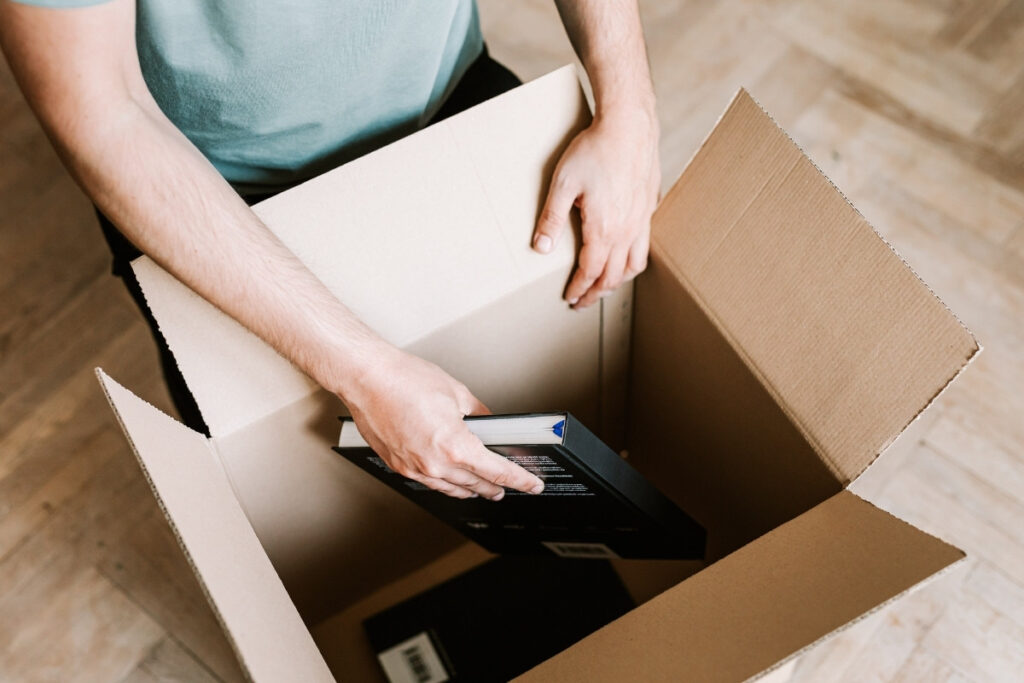
Step 3: Pack Books In Stable Orientations
Different book types behave differently under pressure, so orientation matters.
- Hardcovers: Pack upright (as they sit on a shelf) with spines supported by the box wall, or lay them flat in small stacks.
- Paperbacks: Pack flat to avoid spine creasing.
Avoid packing books spine-up or at sharp angles, as this stresses bindings and corners. Use crumpled packing paper or soft materials to fill gaps and prevent movement, similar to best practices for packing items for self-storage.
Step 4: Seal, Label, And Organise Boxes
Once packed:
- Tape all seams thoroughly, especially the bottom.
- Label each box with the room name and “HEAVY.”
- Consider numbering boxes and keeping a simple inventory list.
Clear labelling doesn’t just help with unpacking, it reduces unsafe stacking and rough handling.
Step 5: Moving And Storage Tips To Prevent Damage In Transit
When loading, place book boxes at the bottom of stacks. Protect them from moisture and excessive heat, especially in cars, garages, or storage environments.
In Australia, heat and humidity are more damaging to books than cold. Short-term storage can actually be safer than repeated unloading and reloading, as long as books are packed correctly and kept in a controlled environment.
Why Packing Books Correctly Matters More Than You Think
Books are deceptively heavy. A single full bookshelf can weigh 40-90 kg, and when that weight is packed incorrectly, problems add up quickly.
From a physical perspective, overloaded boxes increase the risk of back, wrist, and shoulder strain. From a practical one, books have rigid edges that create high pressure on box seams, making cartons more likely to tear or collapse.
Poor packing also damages books themselves. Common issues include:
- Warped or cracked spines
- Torn covers and bent corners
- Pages that yellow or ripple due to moisture exposure
Many books carry sentimental or monetary value, which makes damage especially frustrating. Packing books correctly using small, reinforced boxes and controlled weight limits protects your collection, makes lifting safer, and keeps moving day more manageable.
Why Books Get Damaged During Moves
Books rarely get damaged because they’re “fragile.” They’re damaged because of pressure, moisture, and repeated handling.
Problems usually happen when:
- Boxes collapse under weight
- Books shift inside boxes and rub against edges
- Spines are stressed by incorrect orientation
- Items are loaded, unloaded, and reloaded multiple times
In practice, books are most often damaged during transitions, not while sitting undisturbed. That’s why careful packing and minimising how often boxes are moved matters just as much as the materials you use.
Common Book-Packing Mistakes That Can Ruin Your Collection
Books are often misjudged as “easy” to pack, which leads to avoidable damage.
Common mistakes include:
- Overloading boxes until they’re unsafe to lift
- Using oversized cartons instead of small book boxes
- Leaving empty space that allows books to shift
- Packing books loosely or at odd angles
- Failing to label boxes as heavy
Most book damage happens because of box collapse, not because boxes are dropped. Careful weight control and reinforcement prevent the majority of issues.

Tips For Fragile Or Rare Books
Fragile or rare books include first editions, older volumes, photo books, or annotated texts. These need extra care.
Use acid-free packing paper and wrap valuable books individually. Pack them flat in small quantities and keep them in clearly labelled boxes. Avoid high-heat or damp environments, and consider storage if there’s a long gap between moves to reduce repeated handling.
How Super Easy Storage Makes Moving Books Easier
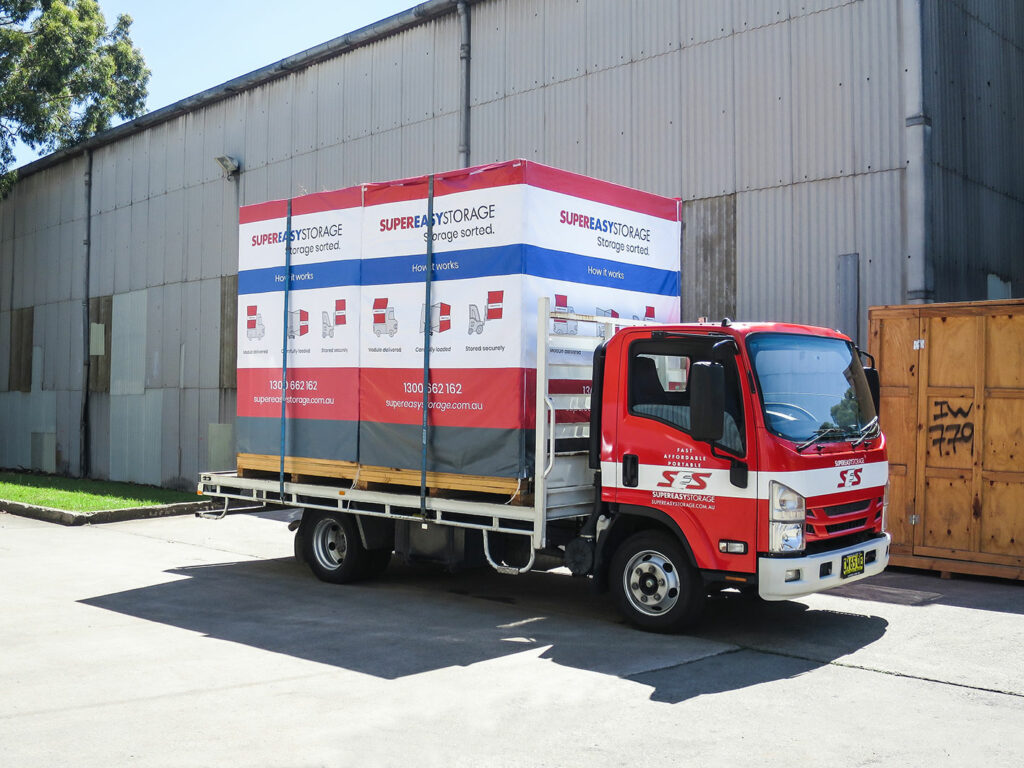
For books, fewer handling steps mean lower risk of damage. Super Easy Storage uses a mobile self-storage model where packed items stay in the same storage pod from pickup through storage and back again.
This approach helps protect books by:
- Reducing packing and unpacking cycles
- Keeping boxes undisturbed in secure facilities
- Offering flexible timelines when move-in and move-out dates don’t align
It’s especially useful during renovations, downsizing, or staged moves where books don’t need immediate access. Many people choose this over traditional facilities after comparing mobile storage vs traditional self-storage
Protect Your Books By Packing Once, Properly
When packed correctly, books are easy to move and store without damage. Use small, reinforced boxes, respect weight limits, pack books in stable orientations, and eliminate empty space. Just as importantly, minimise how often boxes are handled.
For many people, combining careful packing with mobile self-storage creates a calmer, more controlled way to protect books during moves, renovations, or downsizing. Services like Super Easy Storage let you pack once, store securely, and avoid unnecessary lifting or transport, helping to keep heavy book boxes protected until you’re ready for them again.
Frequently Asked Questions
Can Books Be Stored Long-Term?
Yes, if they’re packed properly and kept in a dry, stable environment.
Should Books Be Wrapped In Plastic?
Avoid plastic directly on books, as it can trap moisture. Use paper-based protection instead.
How Do You Protect Books From Moisture?
Use packing paper, keep boxes sealed, and store books in controlled environments away from damp or heat.